
Varanasi for Foreigners: A First-Timer's Guide
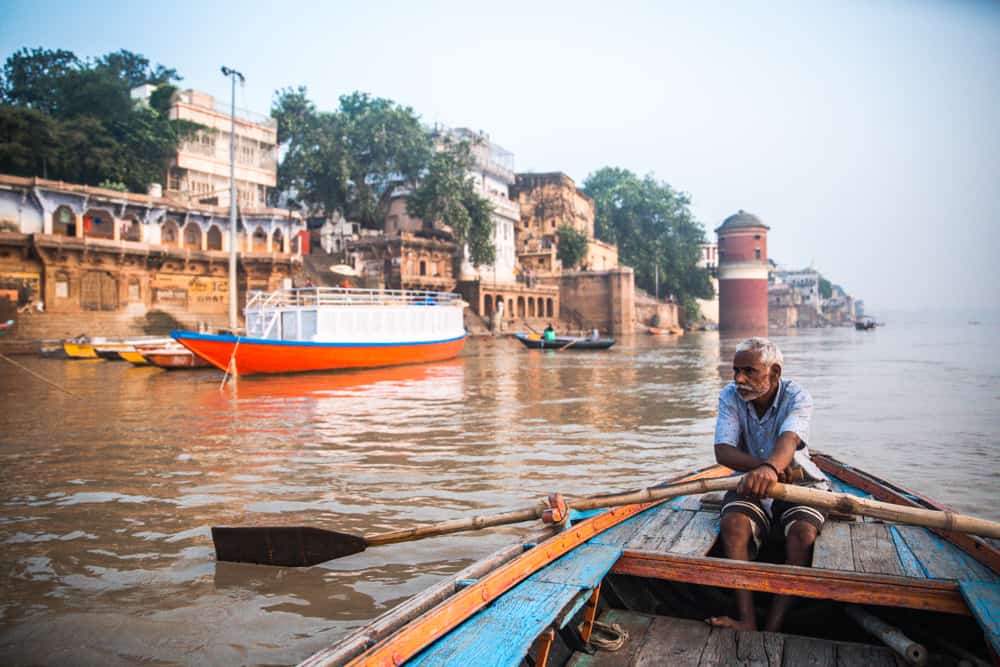
Varanasi is one of the oldest lived-in cities on earth, and for most people flying in from abroad it's also the most intense place they've ever been. That's rather the point. But it's a lot easier to enjoy when you know what's coming. So this guide is the practical stuff: getting in, what to wear, how to behave at the ghats and temples, what's safe to eat, which scams you'll meet, and how to get around a city whose lanes are too narrow for cars.
We're a local family business and we've been driving visitors around Varanasi since 1993. A lot of the people in our cars are seeing India for the very first time. Everything below is what we end up explaining on the way in from the airport.
Getting in: visa, flights and arrival
Nearly every tourist comes in on an e-Visa, which you apply for online before you fly, on the official Indian government portal. Do it at least a week ahead, and use the government site, not an agency that charges you extra for the same form. Print the approval and keep the digital copy too; immigration will want to see it.
The airport is Lal Bahadur Shastri International (VNS), which everyone here calls Babatpur, about 25 km north-west of town. Getting into the centre takes 40 minutes to an hour, depending on traffic. There are a few direct flights from Asian hubs, but most people change in Delhi or Mumbai. Others arrive by train at Varanasi Cantt station, which is right in the middle of things and, fair warning, pretty chaotic.
Please book your pickup before you land. Arrivals is full of drivers offering rides, and haggling over a fare with a heavy bag after a long flight is nobody's idea of a welcome. A fixed-price transfer that's already arranged takes away the most common first-hour headache.
What to wear
India isn't formal, but it is modest, and Varanasi is a holy city, not a beach town. The simple rule is to cover your shoulders and knees when you're out, and definitely at temples. That goes for men as well as women. Loose cotton is far more comfortable than tight synthetic stuff and gets you fewer looks.
Wear shoes you can kick off quickly, because you'll be taking them off all day: every temple, lots of shops, the odd home. A scarf or shawl earns its place too. It covers your head at some shrines, keeps the sun off, and keeps you warm on the river. That last one matters more than people think. From November to February the mornings and evenings are properly cold, especially on a boat, so bring a jacket. Visitors underestimate this every single winter.
No one's going to stop you walking down the street in shorts. It's just that dressing modestly really does cut down the staring, and the whole trip feels calmer for it.
Ghat and temple etiquette
The ghats are the stone steps that run down to the Ganga. They aren't a monument or a viewpoint. They're a working religious space, where people bathe, pray, wash clothes, teach and cremate their dead, all at the same time and all day long.
1. Never photograph the cremations
We'd put this above everything else on the page. Down at Manikarnika and Harishchandra, the fires never really go out; families bring their dead here day and night. Taking photos or video there deeply upsets the grieving families standing right beside you, and you may well be confronted. Put the camera away completely as you walk up. If somebody offers to let you shoot "for a donation", they have no right to give that permission, and you're being set up.
2. Remove shoes before entering temples
There's nearly always a stall or a counter where you can leave them for a few rupees. Some temples don't allow leather at all, and that includes belts and bags.
3. Ask before photographing people
The sadhus in saffron sitting so photogenically on the steps often expect to be paid, and they'll ask after you've taken the picture. Agree first or don't shoot. Ordinary people praying deserve the same courtesy you'd show at home.
4. Walk around, not through
If there's a ritual, a prayer circle or an aarti going on, walk behind it. Don't cut between someone praying and the river or the shrine.
5. Use your right hand
Give, take, eat and pass things with your right hand, since the left is seen as unclean. It's a small thing, but people notice it all the time.
Food and water: what is actually safe
The street food here is brilliant, and it's a real part of being in Varanasi. Here's the thing, though. In our experience, when a guest's tummy goes wrong it's nearly always the water or something raw, hardly ever the hot kachori.
So stick to sealed bottles or filtered water (give the cap a twist to make sure it's never been opened), and leave the tap alone. Skip ice unless you're somewhere that obviously filters its water. When you eat out, pick stalls that are busy and cooking in front of you; lots of customers means the oil and ingredients are fresh. Go easy on raw salad, cut fruit and chutneys from stalls, because they're washed in tap water.
What should you actually try? Kachori sabzi for breakfast, tamatar chaat, malaiyo if it's winter, and a lassi in a clay kulhad. Much of the city is vegetarian, and the old city around the temples strictly so. You won't find alcohol for sale near the ghats.
One more thing, and we mean it. Bhang is sold legally here, in lassi and in sweets. It's cannabis, it's strong, it takes a while to kick in, and every year some visitors seriously underestimate it. If you don't want it, say so clearly when you order.
Scams and hassle to expect
None of this is dangerous. Varanasi is a safe city for visitors, including women travelling alone who dress modestly and stay out of empty lanes after dark. But you will get a lot of people trying to sell you things, and knowing the usual tricks takes most of the sting out.
- The "temple's closed" trick. A friendly stranger tells you the place you're heading to is shut for a ceremony and offers to take you somewhere else. That somewhere is a shop paying him commission. Go and check for yourself.
- Guides nobody asked for. Someone falls into step, talks for twenty minutes, then wants a big fee. Say no clearly at the start. Being politely vague is taken as a yes.
- Boat prices on the spot. Fares quoted at the water's edge can be several times the fair rate, especially at sunrise and at festivals. Book ahead.
- Cremation "donations". A man with an official-looking book says he's collecting wood money for poor families. It's an old, well-worn fraud.
- Pushy silk shops. Banarasi silk is wonderful, and it's also widely faked. Buy from well-known shops, not wherever a driver or guide happens to lead you.
A firm, friendly "no thank you", said while you keep walking, works far better than explaining yourself. Stopping to chat is read as interest.
Getting around
The old city is a maze of lanes that no car can get into, and map apps are close to useless in there. In practice you'll walk the lanes and drive everything else. Autos are cheap and everywhere, but nobody uses the meter, so fix the fare before you get in. Cycle rickshaws are nice for short hops near the ghats.
Most of our overseas guests end up with a car and driver, simply because it ends the daily fare haggling and the driver waits while you explore. Our Varanasi local sightseeing cab does the ghats and temples, and then the very same driver can run you out to Sarnath, Ayodhya, Prayagraj or Bodhgaya another day. Travelling as a big family or a group? Then it's usually one of our tempo travellers, anything from 12 seats up to 26.
Oh, and do mention you'd like an English-speaking driver. So much of what you're looking at here only makes sense with the story behind it, and a driver who can tell you that changes the trip.
When to visit
The comfortable months are October to March: pleasant days and chilly mornings. April to June gets up to 40–45°C and is honestly brutal. July to September is the monsoon, when the river runs high and some ghats flood. It's atmospheric, but it limits the boats.
The big night of the year is Dev Deepawali, fifteen days after Diwali on Kartik Purnima, when all eighty-four ghats are lit with little clay lamps. In 2026 it's on 24 November. It's breathtaking, and it's also the most booked-out night of the year, so read our Dev Deepawali 2026 guide and get a boat sorted early.
A sensible first three days
On the first day, don't try to do much. Land, have a sleep, and in the evening get on a boat for the Ganga Aarti at Dashashwamedh rather than fighting for a spot on the steps.
Day two starts early, sorry. Be at the river by about 5:30 for the sunrise boat, because that hour is the best thing in the city. After breakfast do Kashi Vishwanath and get lost in the old lanes for a bit, then hide from the afternoon heat.
Keep day three for Sarnath, roughly 12 km out, where the Buddha gave his first sermon. It's green and quiet, a lovely break after the ghats, and don't skip the museum.
Staying longer? Ayodhya, Prayagraj, Chitrakoot and Bodhgaya all work as day trips, or string a couple together as a little pilgrimage loop with a night away.
Frequently asked questions
1. Is Varanasi safe for foreign tourists?
Yes, it is. We've driven visitors here for over thirty years and real crime against them is rare. The stuff that does happen is smaller: a bad stomach, a wallet lifted in a festival crowd, somebody trying it on. Cover up a bit, hold your bag close in crowds, skip the dark empty lanes at night, and don't hop into a stranger's car.
2. Do I need to speak Hindi?
Nope. Hotels, the big sights, most drivers and guides, they'll all manage in English. That said, a "namaste" and a "dhanyavaad" (thank you) goes down really well.
3. How many days do I need in Varanasi?
We usually say three full days. With two you're rushing, and by day five you'll be itching for a trip out. Want Ayodhya and Prayagraj too? That's two more. The Buddhist circuit through Bodhgaya takes three.
4. Can I attend the Ganga Aarti as a non-Hindu?
Yes, anyone can come and watch. The evening aarti at Dashashwamedh is open to everybody. You'll be more comfortable, and see far more, from a boat than from the steps.
5. Are all temples open to foreigners?
Most are. Kashi Vishwanath lets non-Hindus in, but there's airport-style security, rules about what you can carry and often a long queue, so bring your passport as ID. A handful of smaller shrines only let Hindus into the inner sanctum, which happens all over India, so please don't take it to heart.
6. How much cash should I carry?
Hotels and the bigger restaurants will happily take your card. UPI is how locals pay, but it usually needs an Indian bank account. So keep small notes for rickshaws, boats, food stalls and shoe-minding. ATMs are easy to find, and where you can, use the ones inside a bank branch.
7. What is the one thing most first-timers get wrong?
Trying to see it all in one day. This city rewards going slowly. One unhurried sunrise on the river will stay with you longer than six sights ticked off a list. Take an afternoon rest, too; the heat and the sheer amount going on are real.
Planning your first trip to Varanasi? WhatsApp us before you fly. We're happy to answer questions with no strings attached, even ones that have nothing to do with booking a car. Call or WhatsApp +91 92503 31290, look at our airport transfer service, or plan your trip.
Book Your Varanasi Trip Today
Need a tempo traveller, cab, or luxury bus for your Varanasi pilgrimage? Varanasi On Wheels offers 24/7 service with transparent pricing.
From our group
- Kashi Rides. Fixed per-person package prices, each with an hour-by-hour plan.
- Kashi Tempo. A printed per-km rate card for group vehicles from 12 to 49 seats.
- Urbania Varanasi Cabs. Only Force Urbania and Maharaja Urbania vans, timed around your darshan.
- World View Travel Services. Our parent company, in Varanasi since 1992.