
Varanasi Ghats Guide: The Famous Ones, the Quiet Ones, and Where a Car Can Drop You
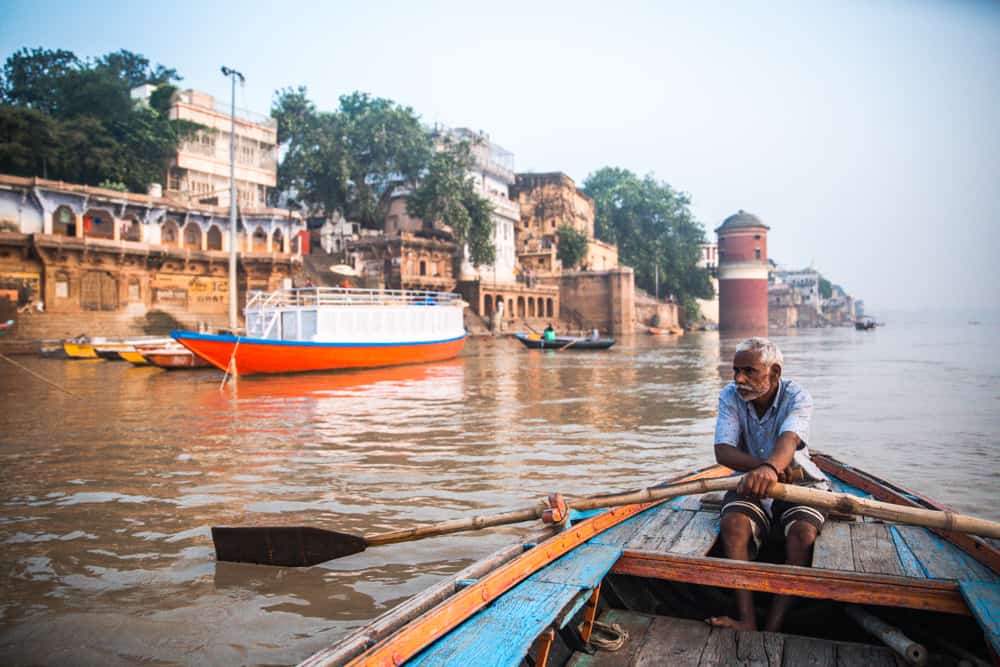
Varanasi has more than 80 ghats — stone steps running down into the Ganga — and they form one continuous riverfront from Assi Ghat in the south to Adi Keshav Ghat in the north, a walk of roughly six to seven kilometres along the water. No car reaches the river itself. Every ghat visit ends with a walk, so the useful question is not "which ghat" but "which ghats, in which order, from which drop point".
The ghats most visitors come for
- Dashashwamedh Ghat: The main ghat and the site of the evening Ganga Aarti, performed by a row of priests with large brass lamps. It starts around sunset, so the time moves through the year — earlier in winter, later in summer. Arrive 45 minutes early for a place on the steps, or watch from a boat.
- Assi Ghat: The southern end of the riverfront, where the river meets the Assi stream. Known for Subah-e-Banaras, the dawn programme of aarti, music and yoga. Calmer than Dashashwamedh and the easiest ghat to reach by road.
- Manikarnika Ghat: The principal cremation ghat, where fires burn day and night. It is a working place of grief, not a sight: do not photograph the cremations, keep your voice down, and decline anyone who offers a paid "guided tour" of the pyres.
- Harishchandra Ghat: The second cremation ghat, south of Dashashwamedh. The same rules apply.
- Panchganga Ghat: Where five rivers are held to meet, four of them unseen. The stone lamp-towers here are lit on Dev Deepawali night.
Quieter ghats worth the walk
- Tulsi Ghat: Named after the poet Tulsidas, who is said to have written part of the Ramcharitmanas here. It hosts the annual Dhrupad Mela, a festival of classical music.
- Chet Singh Ghat: A fortified ghat built by the rulers of Benares, the scene of Raja Chet Singh's 1781 clash with Warren Hastings' troops.
- Darbhanga Ghat: The riverfront's most striking palace facade, built for the royal family of Darbhanga.
- Jain Ghat: Next to the Jain temple associated with Suparshvanath, the seventh Tirthankara, who is believed to have been born in Varanasi.
- Scindia Ghat: Known for the Shiva temple that has partly sunk into the river and stands tilted at the water's edge.
How to see them
The best single view of the ghats is from the water. A boat along the central stretch at sunrise shows the riverfront at its busiest and most beautiful; an evening boat lets you watch the aarti without the crowd on the steps. Boat prices and the difference between rowing and motor boats are in our boat ride guide, and the aarti itself in the Ganga Aarti guide.
On foot, walk one section at a time rather than the whole length. The steps are uneven, wet near the water, and there is little shade. Between July and September the river rises and covers the lower steps, and the continuous walk is often cut.
Where a vehicle can drop you
- Godowlia crossing: The nearest point for Dashashwamedh — about a five-minute walk. Vehicles are often stopped short of it in the evening and on festival days.
- Assi: The road runs close to Assi Ghat, which makes it the best starting point for elders and for anyone who wants to walk north along the river.
- Chowk area: For the northern ghats, including Manikarnika and Panchganga, reached through the lanes.
A local sightseeing package covers a morning or evening of ghat drops with the car waiting. For a group, a tempo traveller keeps everyone together between drop points; a Swift Dzire (₹11/km) is enough for a couple.
Book Your Varanasi Trip Today
Need a tempo traveller, cab, or luxury bus for your Varanasi pilgrimage? Varanasi On Wheels offers 24/7 service with transparent pricing.
From our group
- Kashi Rides. Fixed per-person package prices, each with an hour-by-hour plan.
- Kashi Tempo. A printed per-km rate card for group vehicles from 12 to 49 seats.
- Urbania Varanasi Cabs. Only Force Urbania and Maharaja Urbania vans, timed around your darshan.
- World View Travel Services. Our parent company, in Varanasi since 1992.